One of the questions I’m asked most about pattern imprinted concrete is “do I need to clean it?” The short answer: only as part of resealing it. Here’s why, and how to keep an imprinted concrete drive or patio looking its best for years.
Why I only clean imprinted concrete when I’m resealing it
Imprinted concrete gets its colour and protection from the sealer on top. Pressure washing can remove some of that existing sealer, so cleaning it on its own can leave the surface less protected than before. That’s why I only clean imprinted concrete as part of a sealing or resealing job: the surface is cleaned properly, then protected again straight away.
How often does it need resealing?
The first coat of sealer applied when a drive is laid won’t last for ever, but there’s no fixed interval for resealing: it depends on wear, condition and use. Signs that yours is due:
- the colour has faded or looks patchy
- it has lost its sheen and looks dull
- algae and moss are starting to take hold
- oil and other stains are soaking in rather than sitting on the surface
What sealing does
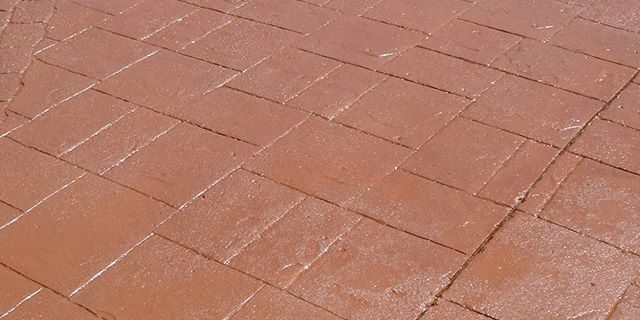
A good sealer protects the concrete against water, oil and other stains, slows colour fading from sunlight and makes it harder for algae and moss to get a grip. A sealed surface is also much easier to keep clean between reseals: a sweep and a rinse with a hose is usually enough.
How I clean and reseal a drive
- Clean: I normally recommend a thorough pressure wash, with oil stains and green growth treated first, so the new sealer bonds to clean concrete. I price the cleaning and the sealing separately, so you can clean it yourself to save money; I’ll inspect it before sealing, and it may need further preparation if it isn’t clean, dry or suitable enough.
- Dry: it needs enough time to dry. Sealer applied to a damp surface can turn cloudy.
- Seal: I use professional SmartSeal and Creteprint solvent-based sealers, clear or tinted, with a minimum of two coats depending on the condition, applied thinly so the sealer doesn’t pool in the joints of the pattern. An anti-slip additive can be added to the final coat.
- Cure: keep cars off the drive for a few days afterwards while the sealer hardens.
Sealing depends on the weather. It isn’t suitable in wet, cold or very hot conditions, and some jobs need to be done early in the morning or in the evening to avoid direct heat. I check the conditions and the forecast before starting, and if there’s a particular risk or further work is needed, I’ll discuss it with you.
Faded drives, cracks and other problems
A faded or neglected drive can often be improved a lot with a tinted sealer, which helps even out the colour. If yours is badly faded, I’ll assess it and advise what colour enhancement is suitable.
Older imprinted concrete often has small cracks, whitening (blooming) or patches where the old sealer is lifting. Resealing won’t make cracks disappear, so if your drive has any of these, mention it when you get in touch and I’ll tell you honestly what can be done.
Get an estimate
Text your name, postcode, the approximate size in square metres and a few photos of the surface to 07754 405080 (WhatsApp preferred). You can read more about my imprinted concrete sealing service.